Problem A: Lots of divots
Location: South America
Turfgrass area: Putting green surrounds
Turfgrass variety: 419 bermudagrass
Problem B: Uneven putting surface
Location: Southern Pines, N.C.
Turfgrass area: Putting green
Turfgrass variety: Uneven putting surface
Scroll down for answers.
Problem A: Lots of divots
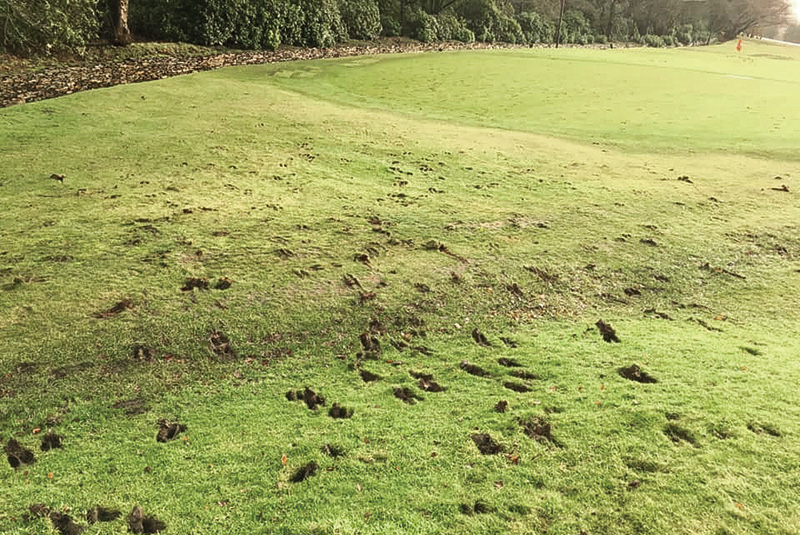
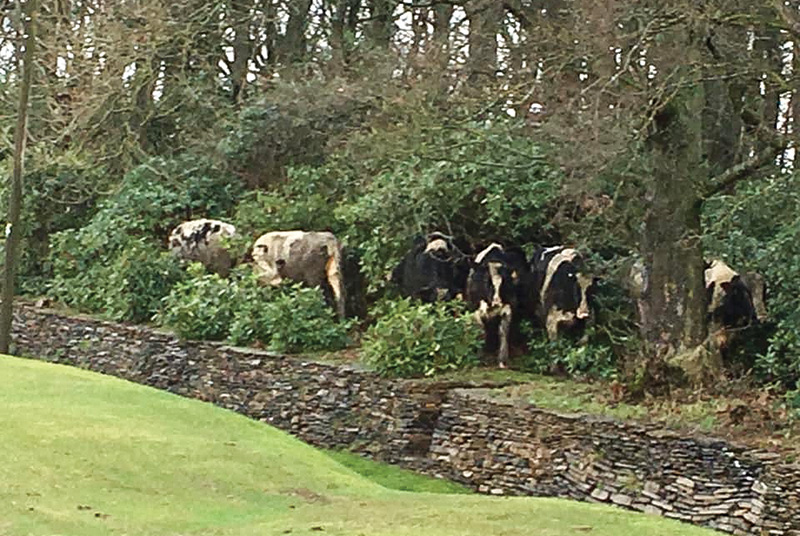
When the superintendent came upon this green during his morning rounds, he was startled to see numerous indentations scattered across the turf surrounding the putting surface. Looking to the right of the green, the superintendent quickly determined what had caused the damage. A neighboring farm had inadvertently left a gate open on a nearby cow pasture, allowing the cows — being cows — to wander onto the golf course in search of greener pastures. Unfortunately, the escape occurred the day after heavy rains had saturated the course, significantly exacerbating the damage caused by the cows’ hooves. The soft, wet soil was particularly vulnerable to deep hoof impressions as the animals moved across the turf. Once the cows were rounded up and returned to the pasture, the deeper divots and depressions were repaired by hand, and the damaged area was rolled to help restore a smooth surface. The putting green itself had also sustained damage and required additional hand repairs. Fortunately, with prompt attention and careful restoration, the affected areas were brought back to a playable condition.
Photo from John Mascaro’s collection
Problem B: Uneven putting surface
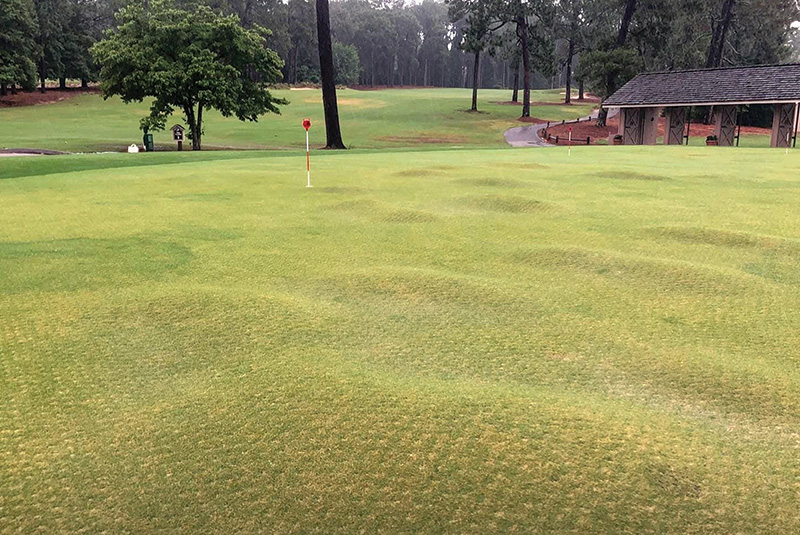
This photo is a blast from the past, dating to 2018. Because the course is located in the transition zone, the decision was made in 2016 to remove the bentgrass and convert the greens to MiniVerde bermudagrass. The maintenance crew had just completed aerification and topdressing when a strong thunderstorm moved through the area, dropping more than 1.5 inches of rain in an hour. After the rain subsided, several unusual water bubbles appeared just beneath the surface of the green. The most likely explanation was that the intense rainfall, combined with the recently completed aerification, created the perfect conditions for water to enter the soil profile through the aerification holes faster than it could move through and exit the USGA-recommendation root-zone profile. In addition, the aerification process may have caused some root shearing, potentially creating a temporary layer that restricted water movement and allowed water to become trapped beneath the surface. The resulting hydraulic pressure lifted portions of the surface, creating the unusual bubbles seen in the photograph. Fortunately, the bubbles subsided on their own within approximately 10 minutes. The crew rolled the greens the following day, and the problem has never reappeared.
Photograph submitted by Chris Mintmier, golf course superintendent/assistant director of golf maintenance at Pine Needles Lodge & Golf Club in Southern Pines, N.C. He is a four-year GCSAA member.
Editor’s note: Have a photo of an on-course anomaly? GCM would love to have a look! Email it to Photo Quiz author John Mascaro.
John Mascaro is the president of Turf-Tec International.