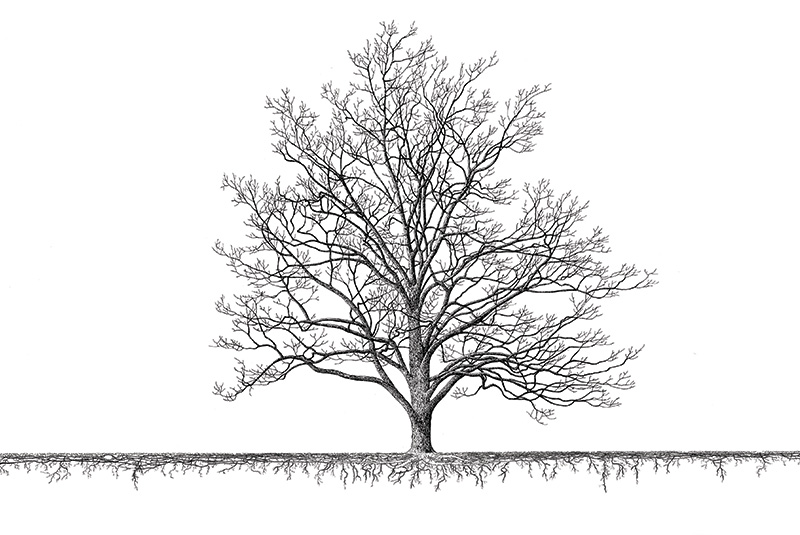
Tree roots are out of sight and often out of mind. This graphic illustrates their depth and width. Illustration courtesy of the Morton Arboretum
Ask any veteran golf course superintendent and they will tell you that one of the most negative influences on the health of their turf is the presence of trees, especially poorly placed ones. The obvious initial issue or point of contention is competition for water and nutrients, especially considering the root spread that resembles a pancake of most shade and evergreen trees. A quick “brain image” is to imagine a root system growing horizontally as wide as the height of the tree. Each species is different, with some more heart-shaped and tap rooted, however the majority are strongly lateral in arrangement, with most of the roots in the upper 18-24 inches of the soil profile. While this competition is certainly impactful, there is more … lots more.
Other problems
Poorly placed trees cause a myriad of problems for both the golfer and the superintendent. In addition to underground roots, many species are surface rooted in nature, with a small or medium percentage of their roots growing at or above ground. Perhaps the worst offenders are bald cypress and the maples, which is unfortunate as they are well adapted to most of the country. When roots rise above the mowing height, they become a trip hazard and can even create an unplayable lie.
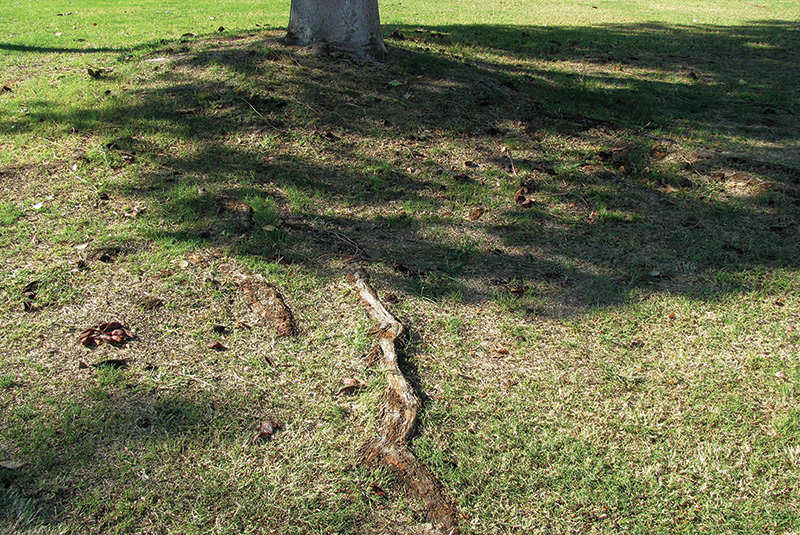
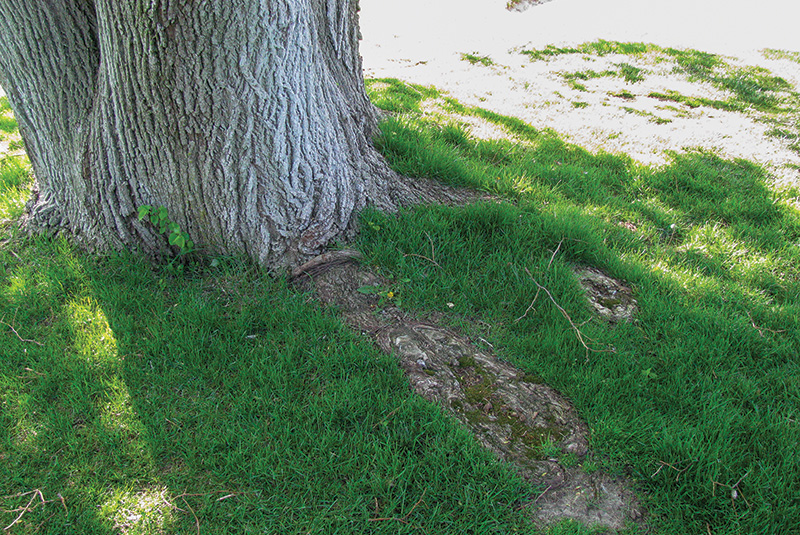
Poorly placed trees often result in surface rooting, which can lead to trip hazards, mower damage, creation of unplayable lies and tree root decay. Photos courtesy of John Fech
As turf is managed, it’s common for mowing equipment to be damaged from the blades striking a woody object such as a surface tree root. When this is repeated as is customary for normal golf maintenance, it becomes a predisposing injury factor for the trees themselves, facilitating the invasion of heartwood decay organisms.
When trees near bunkers, tees, greens, cart paths and concession stands are contemplated, it’s best to avoid species known to be surface rooted.
Still more problems
If dealing with surface roots wasn’t enough of a headache, below ground tree roots sometimes wrap around irrigation lines/heads and grow into valve boxes. When this occurs, water pressure is negatively impacted and the need for immediate repairs becomes paramount. Another integral course element, cart paths and parking lots, can be severely damaged by the spread of root systems. Depending on the extent of intrusion in these situations, reconstruction of paths and surface paving is needed, which can be very expensive.
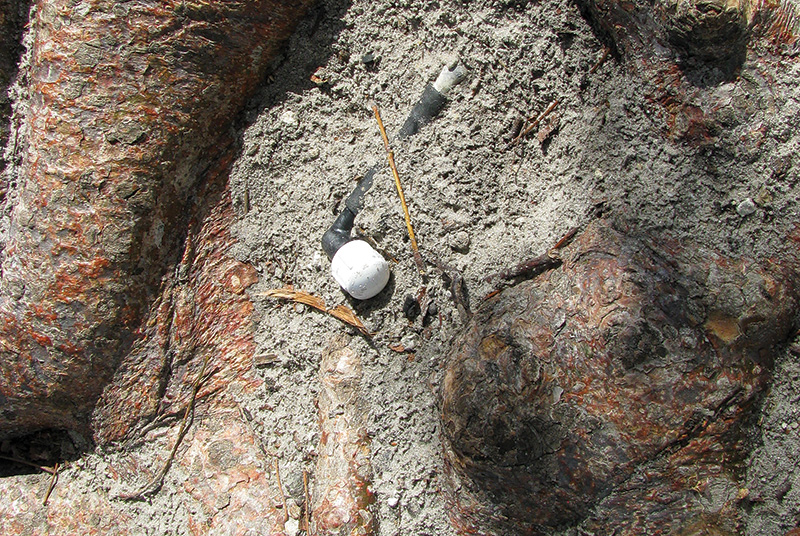
Both surface and below-ground tree roots can be problematic.
Solutions
Root pruning, either with a dedicated root pruner or a modified trencher, is often raised as a solution to solving tree root problems. Many superintendents report that after cutting tree roots, turf health improves greatly. They often convey the same result from irrigation line installation or retrofitting. The process is quite simple — tree roots are causing all sorts of problems, so cut the tree roots and the problems go away … and in most cases, it does.
In fact, the benefits of severing the root system are similar to removing problem trees, ones that produce excessive shade, restrict adequate air flow, pose possible tree failure and litigation, create debris on the playing surface, necessitate storm damage cleanup, block irrigation spray patterns, require pest control and fertility applications and cause encroachment into the line of sight towards the green. Of course, navigating tree removal can be tricky. Quite often, green committee members and other stakeholders are opposed to cutting down trees, even if it improves the safety and playability of the course overall.
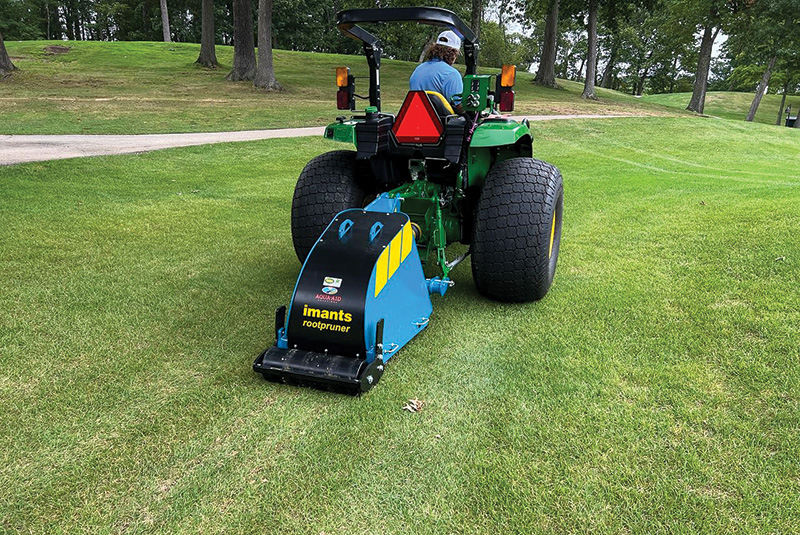
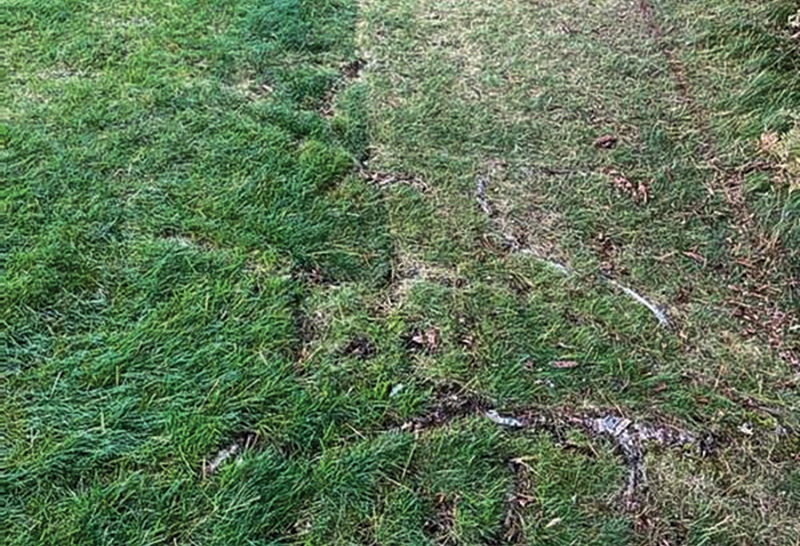
Root pruners and trenchers can be a valuable tool in managing the influences of tree roots.
Root pruning has benefits, but …
All solutions to golf course management issues have pros and cons; none are simple fixes. Severing tree roots is no exception. Despite the many benefits of severing tree roots, trenching and root pruning destabilize trees, reduce capacity to resist wind forces, encourage the invasion of root rot fungi and create a gradual increasing need for extra attention on best management practices in order to help trees recover from root loss.
In addition to the initial time required to prune tree roots and the expense of the pruning equipment, there is a need to repeat root pruning frequently, as root pruning results in root regrowth. Another image that can help visualize the tissue regeneration from recently cut roots is to look at a sheared hedge a month after it is pruned. Shearing is an operation that severs shrub/hedge stems at a predetermined height, with the operator moving the tool horizontally across the foliage; the result is many new stems that grow in response to replace the ones cut off. If you’ve never considered the extent of the root system of some trees or had the opportunity to see it firsthand, these photos help illustrate.
If repeated root pruning injures a tree sufficiently, it may be necessary to remove it from the golfscape. Tree removal results in loss of the many benefits of trees on the golf course (screening of objectional views, depth perception assistance on approach shots, physical barriers between fairways, shade for the clubhouse, dogleg awareness, sound reduction, habitat for animals and aesthetic value in all seasons) and the possible opportunity to face the music and experience the wrath/gnashing of teeth from the green committee and other stakeholders.
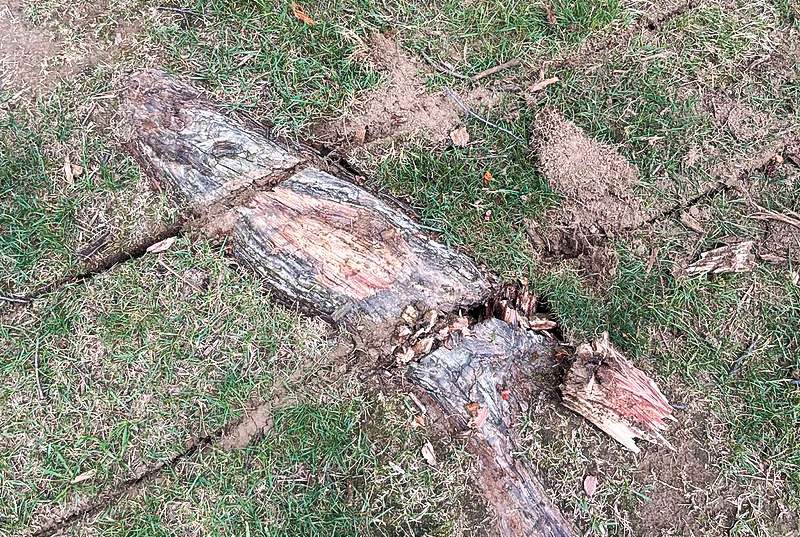
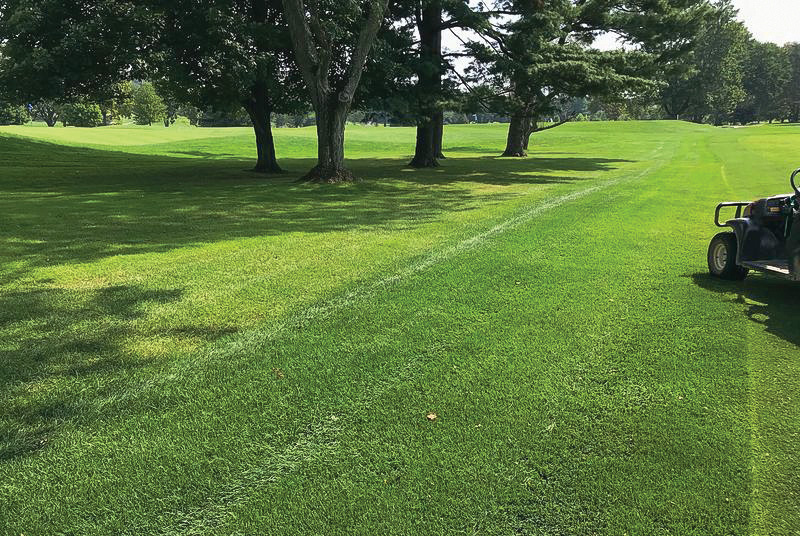
Both a pro and a con, most tree roots grow back quickly after being severed.
Ways to minimize damage to trees
Fortunately, there are several ways to mitigate or lessen the damage to trees from root pruning. First, whenever possible, cut roots on one side of a tree instead of encircling it. After all, cutting half of the roots is better than all of the roots.
A second method is to adjust the depth of the blade penetration into the soil such that only some of the roots are cut, not the entire expanse. Considering that most tree root systems are located in the upper 24 inches of the soil profile, cutting shallowly, leaving the lower portion of the “root pancake” intact is better than cutting deeply. Again, leaving some roots unaffected is better than severing all of them.
Keeping the tree species in mind is also helpful when balancing the benefits of root pruning and the damage it causes. As reported by Denny Schrock, Ph.D., at the University of Missouri, oaks, hickory, honey locust, Kentucky coffee tree, horse chestnut, most conifers, redbud and serviceberry are sensitive to root loss from pruning, while silver maple, linden, cottonwood, poplar, willow and river birch are fairly tolerant. If root pruning must be done around high-value trees, practices such as deep watering, vertical mulching and avoidance of fertilization and frequent inspections by an ISA certified arborist to evaluate the health and stability are recommended.
Other factors affecting the response of trees to root pruning include:
- The proximity to the trunk where roots can be cut and root size. Larger roots located near the trunk tend to generate fewer new roots
- Tree age. Older trees are more likely to become overly stressed and die
- Overall condition. Trees in poor health should generally not be root-pruned
- Tree lean. Leaning trees should not be root pruned
- Number of cut roots. More roots cut equate to more tree stress
Source: Edward Gilman, Ph.D., University of Florida, and Tom Smiley, Ph.D., Bartlett Tree Research Laboratory
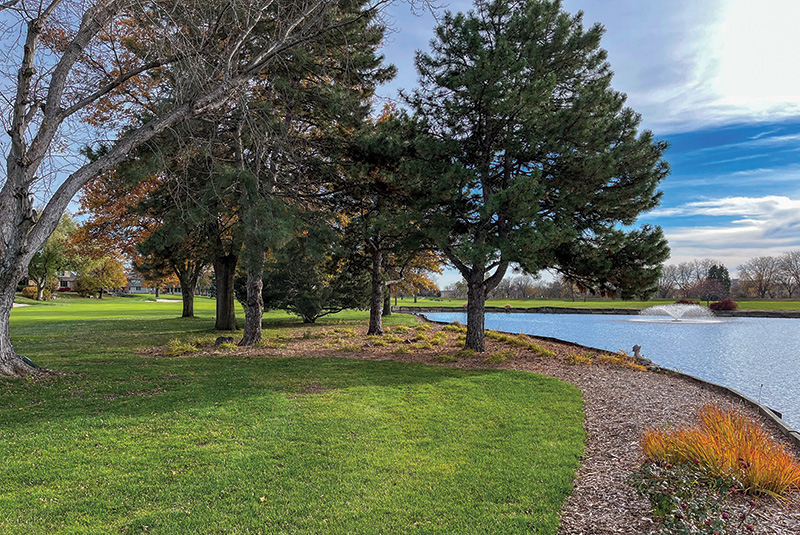
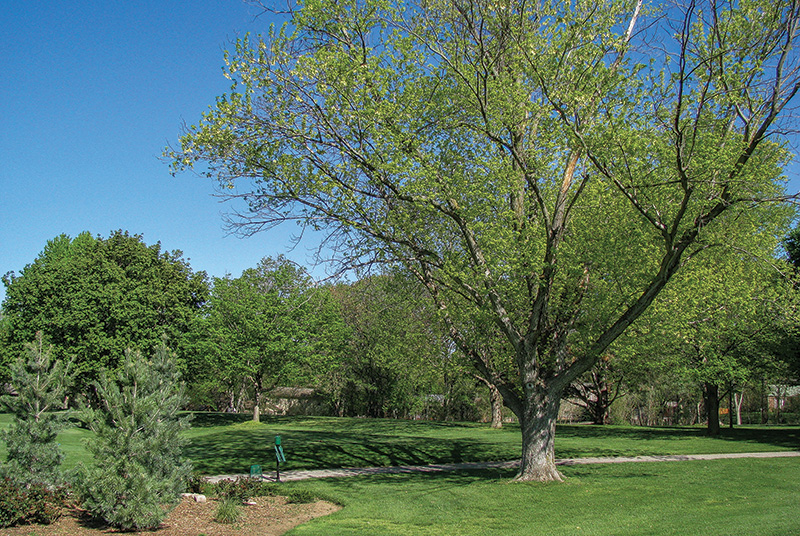
Preventing tree root problems before they start is an important consideration that begins with course design.
Lastly, prevention is a powerful and effective technique in managing the conflicts that arise from poor tree placement. A common design principle in residential landscaping is to separate trees and turf as much as possible; likewise for golf course landscaping — right tree, right place is crucial. It’s about the performance and vitality of each plant or group of plants, trees and turf.
Overall, the goal is to produce a sweet spot with healthy turf and valuable trees that produce an enjoyable recreational golfing experience and overall environmental enhancement.
John C. Fech is a horticulturist and Extension educator with the University of Nebraska-Lincoln. He is a frequent and award-winning contributor to GCM.