Problem A: Thin and stressed turf
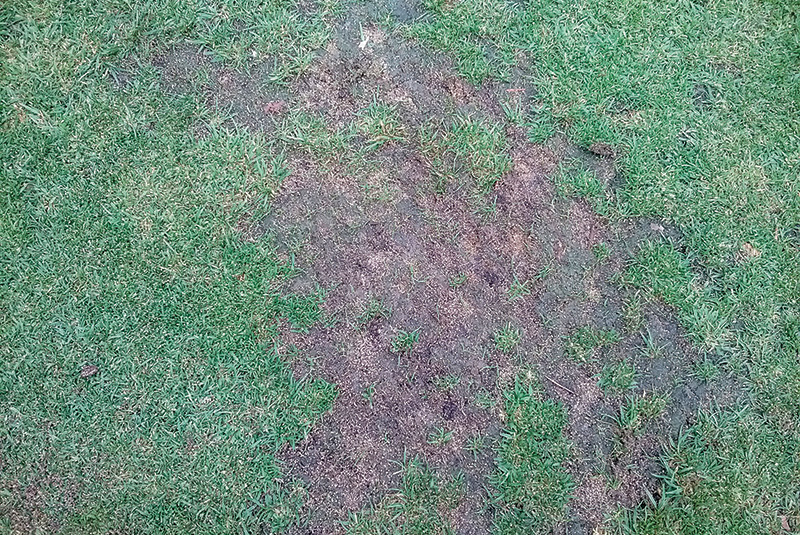
Location: Smethport, Pa.
Turfgrass area: Putting green
Turfgrass variety: Bentgrass/Poa annua
Problem B: Depression on newly seeded green
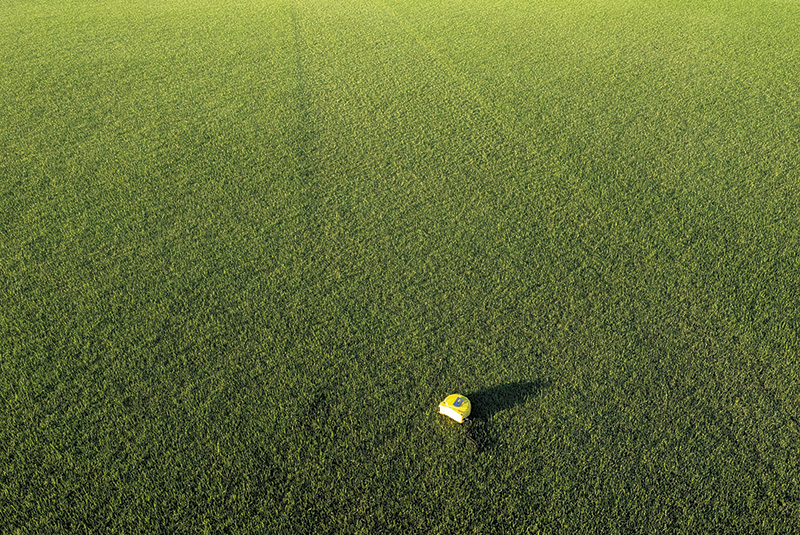
Location: Mesa, Ariz.
Turfgrass area: Putting green
Turfgrass variety: 328 bermudagrass overseeded
Scroll down for answers.
Problem A: Thin and stressed turf
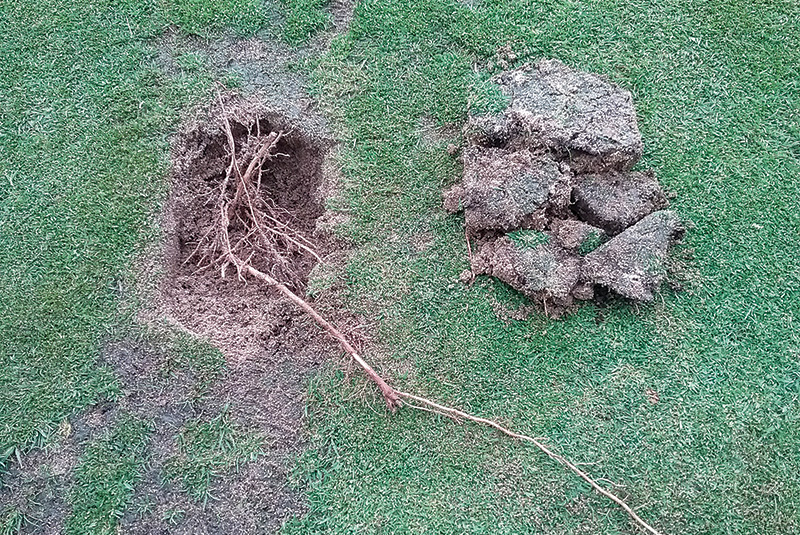
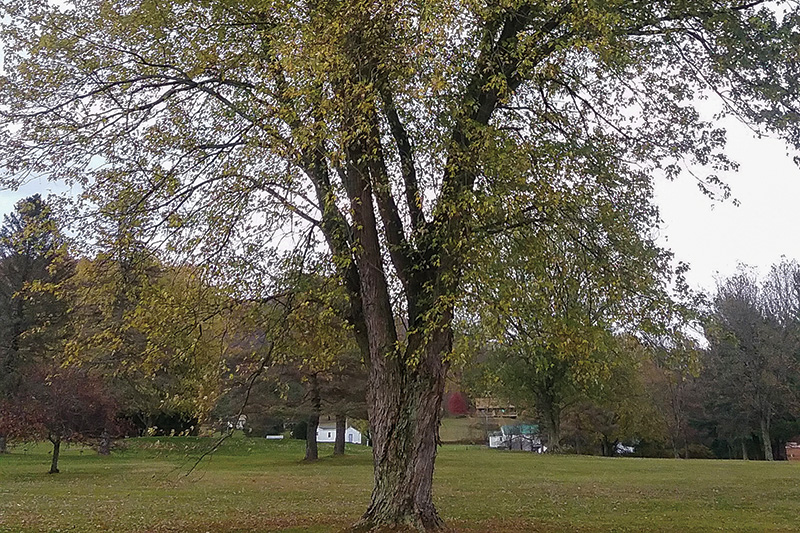
This superintendent has had some thin and stressed turf in the same area of this green before, but on this day the problem became evident. He cut plugs from one of his two practice greens to repair some areas of the green, and this is what he found. These are tree roots in the green’s surface from a silver maple located 65 feet away from the green. The problem was remedied by taking a trencher and digging a 3-foot-deep ditch right off the collar of this green. The superintendent then inserted pieces of corrugated aluminum roofing. The trench was backfilled with the same soil that was removed. He also repeated this process with another green on the course that was experiencing the same issue. This permanently fixed the problem on both greens.
Photo submitted by James Askey, golf course superintendent at Smethport Country Club in Smethport, Pa.
Problem B: Depression on newly seeded green
This photo was taken during the overseeding of a 328 bermudagrass green that was constructed in 1969. Each year, the superintendent overseeds the greens in the fall with a seed mix that is 80% perennial ryegrass and 20% Poa trivialis and Dominant Plus bentgrass. The surface is prepared by scalping the green in multiple directions, verticutting, applying the overseed and then applying a fairly heavy topdressing. The awkward growth pattern was caused by an overzealous employee who was running the topdresser and got ahead of the person applying the overseed. He made a pass with the topdresser before the seed was applied. The assistant superintendent stopped him before he could make a second pass. The depression on the newly overseeded green was caused by the slower germination of the seed that was spread on top of the sand as opposed to below it like the rest of the green. Once the first mowing was performed, observers could not tell the difference.
Photograph submitted by Barrett LaMay, GCSAA Class A golf course superintendent at Apache Wells Country Club in Mesa, Ariz., and 21-year association member.
Editor’s note: Have a photo of an on-course anomaly? GCM would love to have a look! Email it to Photo Quiz author John Mascaro.
John Mascaro is the president of Turf-Tec International.