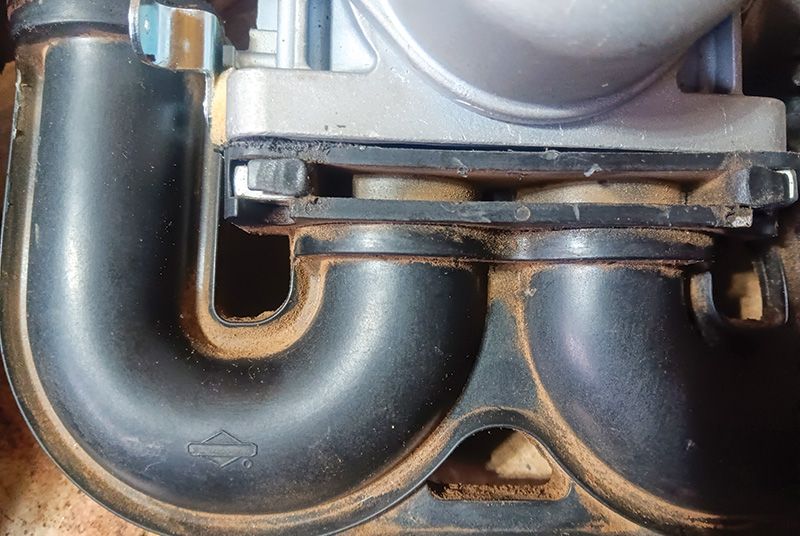
An air gap at the lower face of the plastic intake manifold caused serious problems on a new Briggs & Stratton V-twin engine. The problem developed on the lower side of the carburetor mounting flange, the area that's closest to the hot exhaust pipes.Photos by Scott R. Nesbitt
After seven hours of running, our new Briggs & Stratton 22-hp V-twin started popping and coughing, losing power and needing excess crank time to start.
The engine had the much-maligned Nikki two-barrel carburetor. Two replacement carbs offered no cure. The problems got worse.
The solution: A new aluminum manifold was installed, replacing the original plastic manifold. The plastic manifold had warped, creating a massive air leak that leaned out the mixture.
Briggs part number 797503 is the aluminum manifold kit. Prices for this kit vary insanely, from just under $100 to almost $300. Shop wisely. Make sure they are selling the metal manifold, not the plastic version. I paid about $150 to get mine quickly from Amazon.
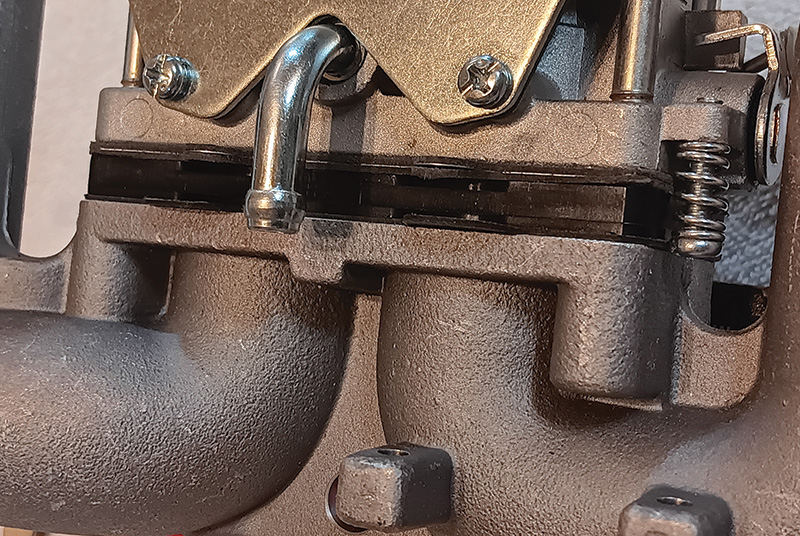
The block between the new manifold and the carburetor helps block heat transfer that might cause fuel in the carburetor to boil out, especially when the hot engine is shut down and air stops flowing to keep things cool.
It seemed the engine was running on only one cylinder, resulting in major loss of power. We checked valve lash and verified that both spark plugs were getting current. New plugs were installed. The fuel was replaced with non-ethanol 90 octane gasoline, since bad fuel is always going to disrupt an engine's performance.
The surest diagnosis came by using a laser infrared thermometer (under $12 online). That tool showed the left cylinder's exhaust manifold was running more than 120 degrees colder than the right, confirming that only the right cylinder was working normally.
There are two good YouTube videos that led to finding the warped plastic manifold problem. They are “Briggs & Stratton V-Twin Aluminum Intake Upgrade” posted by Zerko’s garage and “Briggs & Stratton Leaking Plastic Intake (Solved)” by CaptFerd.
It turned out that the original black plastic intake manifold had warped. The air gap was on the underside of the manifold, the area most exposed to heat from the exhaust pipes and muffler. Over-tightening the carburetor mounting bolts might have worsened the situation.
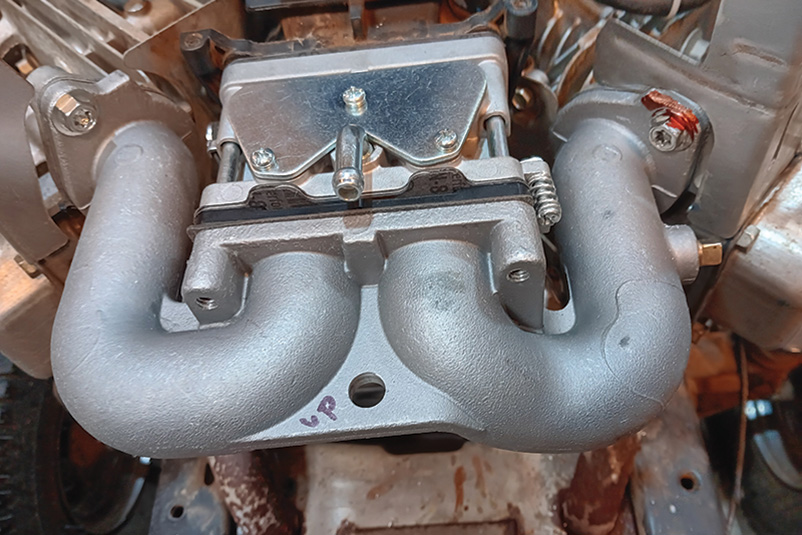
Some grinding on the engine's top cover was needed because the new manifold and heat isolator moved the intake air horn closer to the engine block, causing interference between the cover and air horn.
Some tinkering was needed to install the new aluminum manifold. A drill bit had to be run through to slightly open the four misaligned bolt holes that mount to the engine.
Because the metal manifold conducts heat better than plastic, the kit includes a plastic heat shield that mounts between the manifold and carburetor throttle side.
This moves the carburetor a little closer to the engine block, so the engine cover had to be ground a little to fit properly over the aid horn and to install the screws that sit under the filter.
There were still some running issues with the new manifold in place. On hand were three carburetors — the original that came with the engine and two after-market units. Some problems were found — not with the carburetor design, but with some of the internal rubber parts.
Next: dealing with the notorious Nikki carburetor.
Scott R. Nesbitt is a freelance writer and former GCSAA staff member. He lives in Cleveland, Ga.