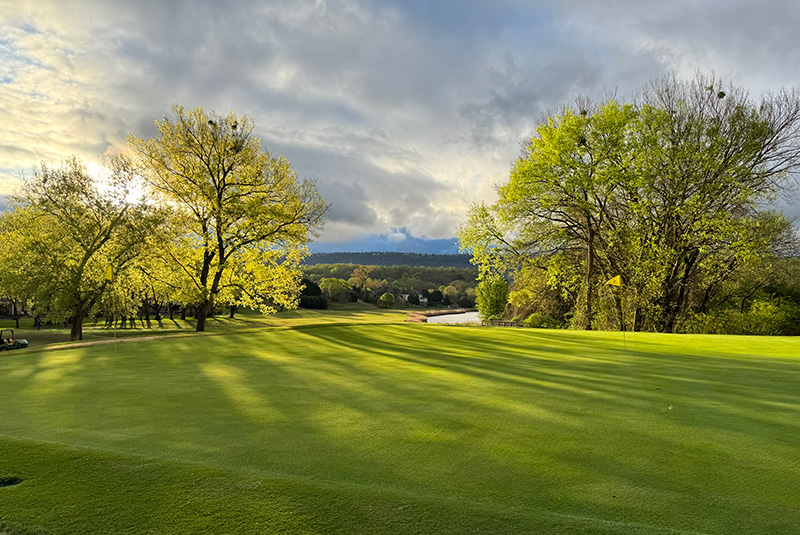
Spring green up at Black Creek Club in Chattanooga, Tenn. Photos courtesy of Brent Roberson
Spring has arrived, and for those of us managing warm-season turf in the transition zone, it can be one of the most challenging times of the year.
Picture the second week of April. Members are watching The Masters, where lush, green perennial ryegrass is thriving and azaleas are in full bloom. It’s one of the most beautiful settings in golf.
Now shift back to your own course — one that isn’t overseeded, coming off a recent frost. Bermudagrass is slow to respond, uneven at best, and nowhere near full green-up. The inevitable question follows: How do we improve the transition?
The answer begins with understanding that no two winters are the same. Some years are mild, and Bermudagrass begins to green up in late February or early March. Other years, lingering cold temperatures delay growth well into April.
To a large extent, we are at the mercy of soil temperatures and weather patterns. But while we can’t control the environment, we can control how we prepare for it.
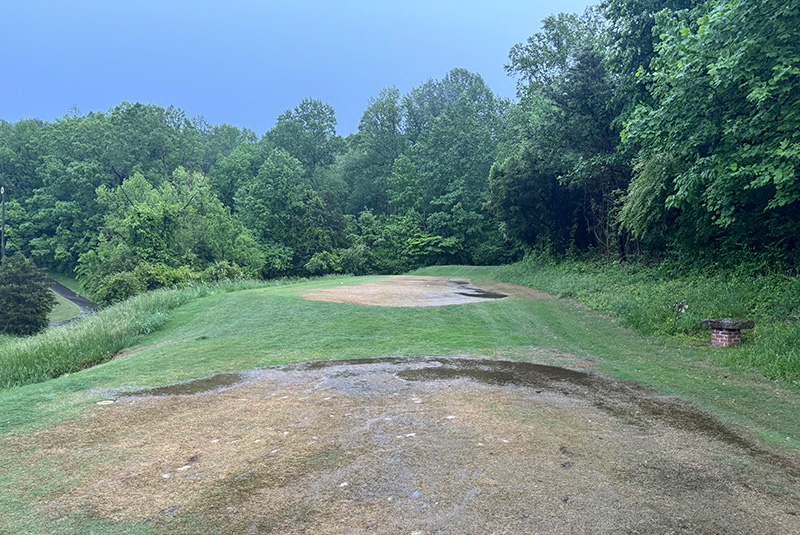
This heavily shaded tee box is one area on the course at Black Creek Club that struggles to emerge from winter dormancy.
Play defense in the fall
Successful spring transition begins months earlier. Mid- to late-fall management is when to start playing defense.
Raising mowing heights ahead of the first frost helps build carbohydrate reserves and improve winter survival. As temperatures drop, traffic management becomes critical. Depending on play volume and club expectations, keeping carts on paths throughout the winter can significantly reduce stress. When that’s not feasible, stakes, ropes or geofencing can help redirect traffic away from vulnerable areas.
At Black Creek Club, we’ve also had to rethink internal traffic patterns. One example has been wear around bunker entry and exit points from mechanical rakes. Simply rotating or adjusting those patterns can make a meaningful difference over time.
Consistency is key — for both your members and your maintenance team. Limiting unnecessary traffic wherever possible pays dividends in the spring.
Managing winter moisture
Winter irrigation is often overlooked, but desiccation can be just as damaging as cold temperatures, especially on sandy soils or newly established turf.
Applying water strategically, along with continued use of wetting agents in historically dry areas, helps maintain plant health through dormancy. At the same time, excess moisture in shaded environments can be equally problematic. Repeated freeze-thaw cycles in saturated soils can lead to significant root damage.
At Black Creek, we’ve addressed this by improving surface drainage, selectively thinning trees and transitioning to more tolerant turf varieties in problem areas. These changes don’t eliminate winter stress, but they help mitigate its impact.
Protecting high-traffic areas
Collars and green surrounds are often the first areas to show stress coming out of winter, especially on courses with creeping bentgrass greens where mowing continues year-round.
Following spring aerification and heavy topdressing, traffic management becomes even more important. Turning boards around greens and rotating entry and exit points can help reduce concentrated wear. If staffing allows, increasing the frequency of these adjustments can further protect those high-stress zones.
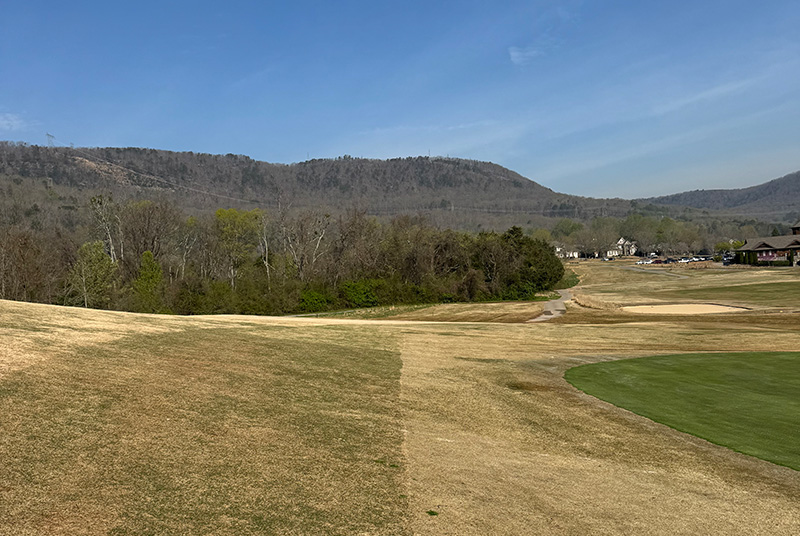
An area to the right of Black Creek Club's 10th green. The greener patch of grass on the left was covered during the colder months.
Herbicide timing matters
Pre-emergent herbicides are an important tool, but they can also influence spring transition.
Applying the first application while Bermudagrass is fully dormant helps minimize impact on green-up. The second application should be timed carefully, ideally when the turf is nearing full recovery. Poor timing can delay transition and compound existing stress.
Accept what you can’t control
There are countless factors that contribute to winter injury, and ultimately, Mother Nature sets the tone each year.
Our role as superintendents is to manage what we can — preparation, moisture, traffic and inputs — while staying attentive to changing conditions. Monitoring the forecast and adjusting accordingly remains one of the most valuable tools we have.
Spring transition in the transition zone will never be perfect. But with thoughtful planning and disciplined execution, we can position our turf — and our courses — for a stronger, more consistent start to the growing season. After all, summer is right around the corner.
Brent Roberson is a GCSAA Class A golf course superintendent at Black Creek Club in Chattanooga, Tenn., and a 20-year member.