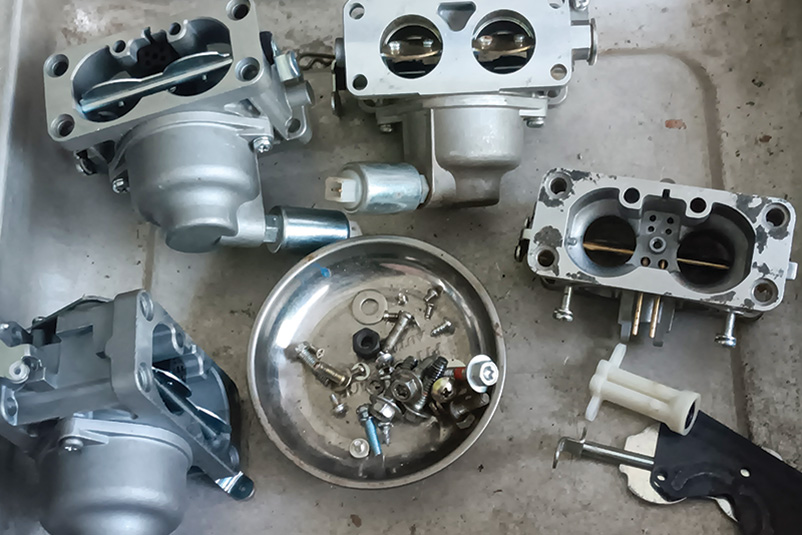
Nikki carburetors used on Briggs & Stratton V-twin engines are found in the millions. There are variations, but all share complex internal passages, are not adjustable and are more easily replaced than repaired. Photos by Scott R. Nesbitt
After replacing a warped plastic intake manifold on a Briggs & Stratton V-twin engine, problems may persist. Focus on the Nikki-designed two-barrel carburetor and the O-rings and gaskets inside. Tucked between the two cylinders, the Briggs manifold tubes are too short for adequate fuel-air mixing. The Nikki makes the air and fuel travel together inside the carb body to give more time and distance for the fuel to vaporize.
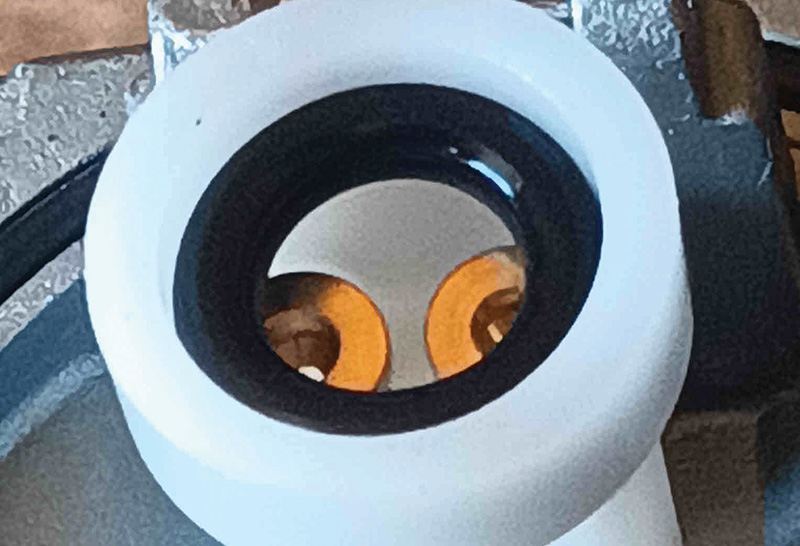
The fuel jets at the bottom of the fuel pipe can come loose if their retaining O-rings are weakened.
A Nikki repair manual warns: “Do not soak non-metallic components, such as floats, O-rings, seals, or diaphragms, in carb/choke cleaner or they will be damaged. If any passages remain plugged after cleaning, replace the component or the entire carburetor assembly.”
A new OEM unit costs about $200, while $30 to $50 buys an after-market clone in a kit that includes new spark plugs, air, fuel and oil filters, and other goodies. I've yet to get a clone with defects in the body casting, so I choose replacement.
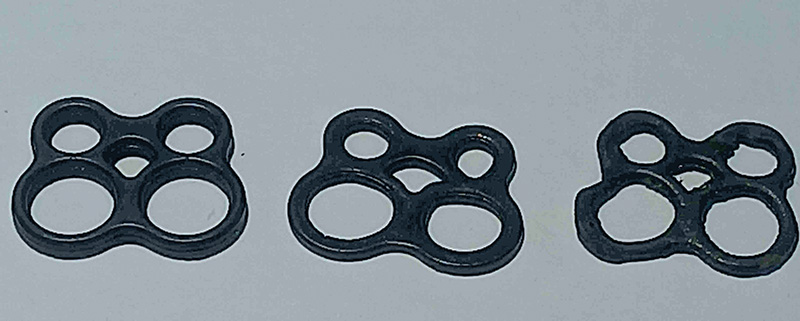
The fuel tube must be sealed with a new gasket at left, a good used gasket at center and a scrunched gasket found in an aftermarket carb that lets only one cylinder run properly.
Spend a few more bucks and get a repair kit with the rubber gaskets and take apart the new clone. Look for scrunched or skewed gaskets. Lots of YouTube videos can guide your work.
The most critical part is the white plastic fuel pipe between the bowl and main body. Put a dab of oil on the four-hole fuel pipe gasket to hold it in place while you lower the carb body’s two brass tubes from above. Oil all O-rings before installation, especially the two tiny ones that hold brass jets in the bottom of the fuel tube. Don’t swap the jets; they are different sizes. Check that the holes are fully open in the gasket under the black plastic fuel nozzle on the choke side of the carb.
Soaking in carburetor cleaner can ruin important gaskets. The high-speed jet is at left, the fuel pipe is at center, with the tiny O-ring that holds the brass jet at the base of the fuel pipe.
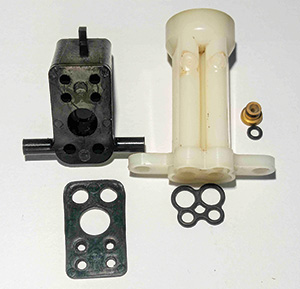
The fuel tube has two large and two small pipes. Two cross-drilled brass pipes on the main body bring air into the large pipes. The air mixes with fuel from the bowl. Suction from the engine draws the mix up into channels on top of the body. The channels feed the idle/low speed nozzles above the throttle plates, then feed the black nozzle behind the choke at wider throttle.
This premixed air/fuel makes for good combustion. There are no adjustments other than the idle screw. The Nikki is two separate precision carbs mounted in one body, feeding two separate intake manifold runners. Your V-twin Briggs may run on only one cylinder if there's one bad rubber part.
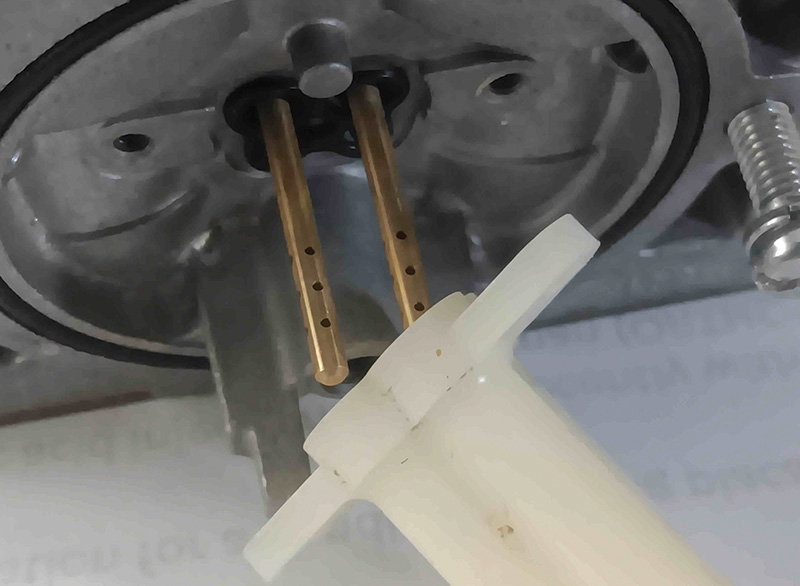
Brass pipes feed air into the white plastic fuel tube, starting the process of vaporizing fuel.
I know that any dirt getting past a fuel or air filter can make an unremovable clog in the tiny, precise Nikki carb passages. You might get lucky with a repair if the only problem is varnish in the fuel bowl, and you need just a few new gaskets.
Scott R. Nesbitt is a freelance writer and former GCSAA staff member. He lives in Cleveland, Ga.