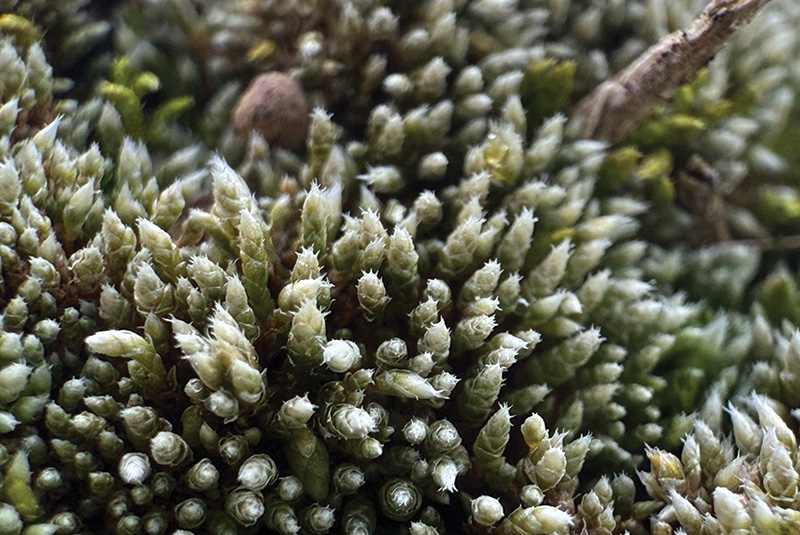
Figure 1. Individual gametophores of silvery thread moss. Photo by Mike BattagliaPhotos courtesy of Joseph Sims
Silvery thread moss (STM) is a problematic and unique weed of golf course putting greens. Like all mosses, STM does not possess a vascular system, meaning it cannot translocate water and nutrients. Instead, it must directly absorb water through leaf surface contact. To better regulate water availability, STM produces a highly dense stand of leaves and stems (termed gametophores, Figure 1) that retains water through adhesive forces. This dense growth habit also enhances its competitiveness and limits encroachment by adjacent putting green turf (Figure 2). Furthermore, STM can withstand extended periods of dehydration and rapidly recover upon rehydration. (10)
Recent trends in golf course maintenance have resulted in greater stress on golf course putting greens due to lower mowing heights, reduced fertility and light irrigation. Increased putting green stress gives STM a competitive advantage at extremely low mowing heights. Light and frequent irrigation favors STM development by keeping the upper surface moist. Even light nitrogen (N) fertility can encourage STM since it has lower N requirements than turfgrass (7)
Historically, heavy metals were commonly used to control STM. Many of these products are no longer available in turfgrass due to human/environmental concerns. Copper- and iron-containing products have had mild success against STM, but there are concerns over phytotoxicity and long-term metal usage on greens (1). There are even exotic options like dish soaps, peroxides and baking soda, but many of these can be equally toxic to turfgrass and are not currently labeled for use on putting greens (6). Currently, the most common chemical control option for STM is carfentrazone-ethyl (Quicksilver), and its high efficacy has been documented in numerous studies (2, 9). Chlorothalonil, a widely used contact fungicide, is surprisingly effective at controlling STM (3, 5). The exact mechanism of action is unclear, but some have reported increased effectiveness of chlorothalonil at higher temperatures. Other contact fungicides, such as mancozeb and thiram, have also been tested against STM with mild to moderate success. With any of these products, regardless of their efficacy, multiple applications are generally necessary to achieve lasting STM control. The purpose of our study was to evaluate the efficacy of tank-mixes containing chlorothalonil, mancozeb, thiram and the previously untested fungicide fluazinam against STM and to compare these treatments against the industry standard, carfentrazone-ethyl.
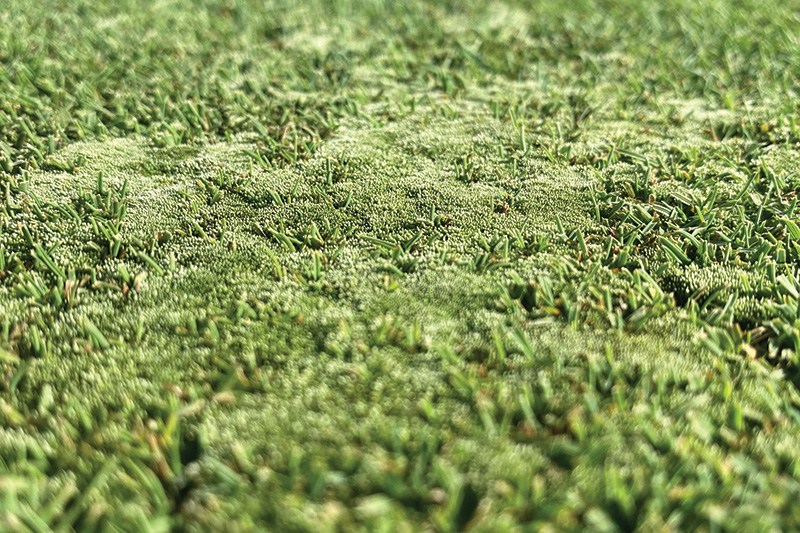
Figure 2. Silvery thread moss on a creeping bentgrass putting green. Photo by Wendell Hutchens
Materials and methods
Research was conducted in Fayetteville, Ark., in 2023 on Pure Eclipse and Ninety-Six Two creeping bentgrass greens. Both greens were naturally infested with significant STM. Treatments included all combinations of four contact fungicides: chlorothalonil (Daconil Weatherstik; Syngenta Crop Protection Inc.), fluazinam (Secure; Syngenta Crop Protection Inc.), mancozeb (Fore 80WP Rainshield; Corteva Agriscience) and thiram (Spotrete F; Nufarm). Two non-treated controls were included and carfentrazone-ethyl (Quicksilver, FMC Corp.), a commonly used herbicide for STM control, served as a positive control (Table 1). The trials were arranged in a randomized complete block design with four replications. All products were applied at their highest labeled rate.
Initial treatment applications began on Sept. 7, 2023, with subsequent applications on Sept. 25, 2023, and Oct. 10, 2023. Initial plot assessments for percent STM (mossi) were taken on Sept. 5, 2023. From Sept. 11, 2023, to Oct. 19, 2023, plots were assessed twice weekly for percent STM. Percent STM reduction was determined using the formula (mossi - mossx/mossi) * 100, where mossx is the percent STM coverage on x rating date. Turfgrass quality (1-to-9, where 1 = completely dead, 6 = acceptable and 9 = excellent) and percent STM damage were also visually assessed.
Percent STM damage is defined as the percentage of total plot area infested with STM that expressed necrosis. Percent STM reduction, percent STM damage and turfgrass quality data were transformed into an area under the progress curve (AUPC) to better represent treatment effects throughout the trial period. AUPC data were subjected to analysis of variance, and means were separated using a Fisher’s LSD at p < 0.05. Due to a sprayer misapplication on the Ninety-Six Two green, data for the carfentrazone-ethyl treatments were omitted from analysis.
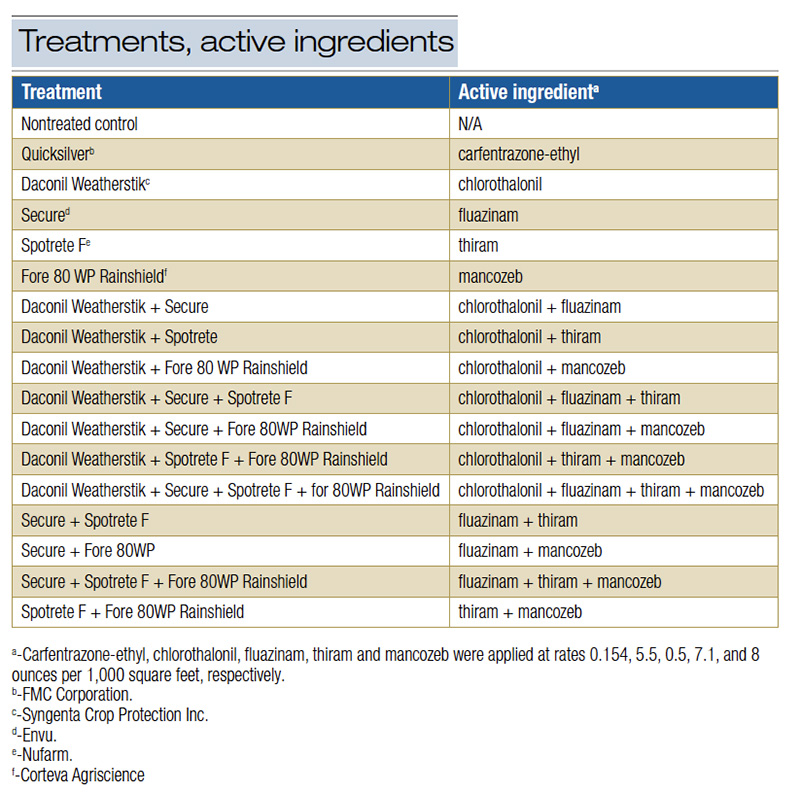
Table 1. Treatments and the active ingredients applied to creeping bentgrass greens in 2023 in Fayetteville, Ark.
Results
Ninety-Six Two trial site
With the exception of chlorothalonil + fluazinam + thiram, all chlorothalonil-containing treatments reduced STM coverage compared to the non-treated control (Table 2). Among chlorothalonil-containing treatments, however, there were no differences. The combination of fluazinam + thiram + mancozeb was the only non-chlorothalonil-containing treatment to effectively reduce STM coverage compared to the non-treated control.
In addition to reducing STM coverage, chlorothalonil-containing treatments caused the most STM damage. The day after application, the STM would turn an orange/light brown color (Figure 3). The seven most damaging treatments all included chlorothalonil in combination with one or more additional contact fungicides. However, chlorothalonil-alone and chlorothalonil + mancozeb had little effect on STM damage. Treatments without chlorothalonil did not result in any greater STM damage than the non-treated control.
Due to significant initial STM infestation, turfgrass quality ratings were considered unacceptable for all treatments throughout the trial period. However, treatments that provided the greatest reduction in STM had the highest turfgrass quality ratings. Only chlorothalonil + thiram + mancozeb resulted in higher turfgrass quality than the non-treated control.
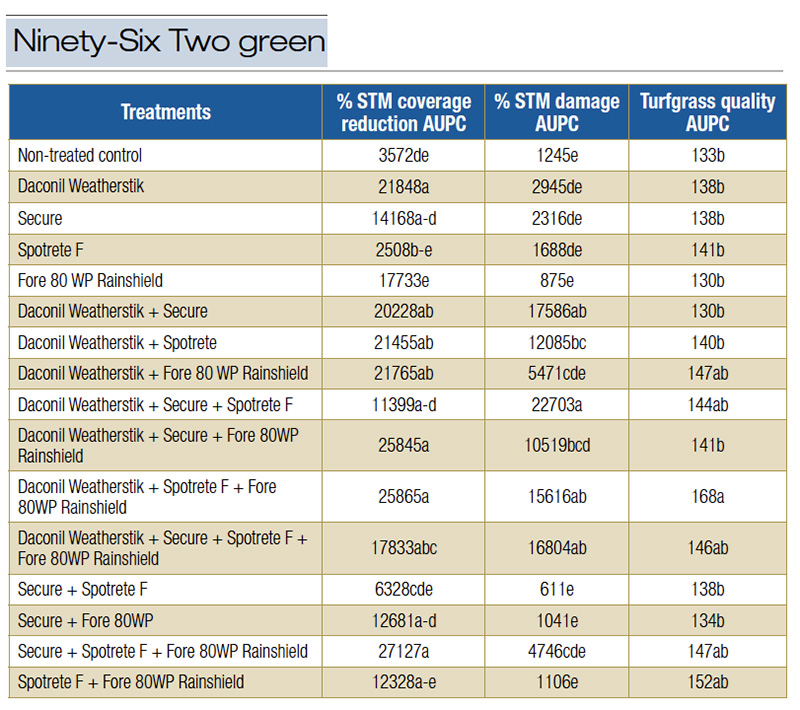
Table 2. Percent silvery thread moss (STM) coverage reduction area under the progress curve (AUPC), percent STM damage AUPC and turfgrass quality AUPC means for each treatment. Study conducted on a Ninety-Six Two creeping bentgrass putting green in Fayetteville, Ark., in 2023. Means in the same column followed by a common letter were not significantly different according to Fisher’s LSD (p < 0.05).
Pure Eclipse trial site
All treatments reduced STM coverage compared to the non-treated control (Table 3). Chlorothalonil-alone provided similar reduction of STM compared to chlorothalonil + fluazinam + mancozeb + thiram and chlorothalonil + fluazinam + mancozeb. Carfentrazone-ethyl was moderately effective at controlling STM, performing better than the non-treated control, but it was statistically indistinguishable from any other fungicide treatment. Treatments that involved multiple fungicides tended to result in the greatest STM reduction.
Carfentrazone-ethyl, chlorothalonil + mancozeb + thiram, chlorothalonil + fluazinam + thiram and chlorothalonil + fluazinam + mancozeb + thiram resulted in the greatest STM damage. Damage from carfentrazone-ethyl turned the STM into a brown/black color, as opposed to an orange/light brown color from chlorothalonil-containing treatments (Figure 4). Similar to the Ninety-Six Two trial, chlorothalonil-containing treatments tended to cause the most damage to STM, but chlorothalonil-alone had no effect. Non-chlorothalonil-containing treatments (besides carfentrazone-ethyl) caused minimal damage to STM. STM damage was transient, however, as symptoms tended to fade two weeks post-application. Several treatments provided greater turfgrass quality than the non-treated control, including chlorothalonil + mancozeb, chlorothalonil + fluazinam, fluazinam + thiram + mancozeb, chlorothalonil + fluazinam + thiram + mancozeb and chlorothalonil-alone.
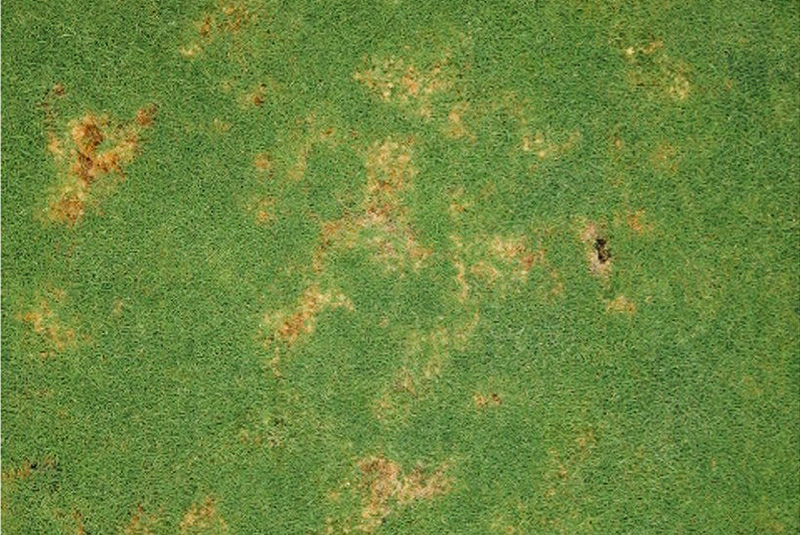
Figure 3. Orange to light brown discoloration of silvery thread moss on a Ninety-Six Two creeping bentgrass putting green in Fayetteville, Ark. Photo taken Sept. 13, 2023, six days after the first application of chlorothalonil + mancozeb + thiram. Photo by Mike Battaglia
Discussion
Treatments including chlorothalonil were generally the most effective at reducing STM coverage. Several prior studies have reported success in managing STM with chlorothalonil (3, 5). Chlorothalonil-containing treatments were just as effective at reducing STM coverage compared to carfentrazone-ethyl, the most commonly used herbicide for STM management. While carfentrazone-ethyl and chlorothalonil-containing treatments were highly effective at reducing STM, there were still unacceptable levels of STM at study completion, indicating the difficulty of complete eradication. Chlorothalonil is commonly used to control a variety of turfgrass diseases on golf course putting greens, but there are yearly use restrictions due to environmental concerns (6). In our study, we used the highest labeled rate of chlorothalonil (5.5 fluid ounces per 1,000 square feet/17.5 liters per hectare), and multiple applications at this rate would be prohibited. In a separate study conducted in Virginia (data not shown), we found that lower rates of chlorothalonil (3.6 fluid ounces per 1,000 square feet/11.46 liters per hectare) were still effective at reducing moss coverage. In addition to chlorothalonil, it is recommended to incorporate carfentrazone-ethyl and other contact fungicides to avoid exceeding label use rates.
The use of fluazinam, mancozeb and thiram individually did not provide comparable reduction in STM coverage compared to chlorothalonil-alone and chlorothalonil-containing tank-mixes. Literature on the use of mancozeb and thiram has been inconsistent (1, 4). In our study, the combination of mancozeb + thiram showed little effectiveness; however, the addition of fluazinam to the mix of mancozeb + thiram provided excellent reduction of STM coverage similar to chlorothalonil-containing treatments. The use of fluazinam, which had not previously been reported for use on STM, can be an effective option against STM when applied with other contact fungicides.
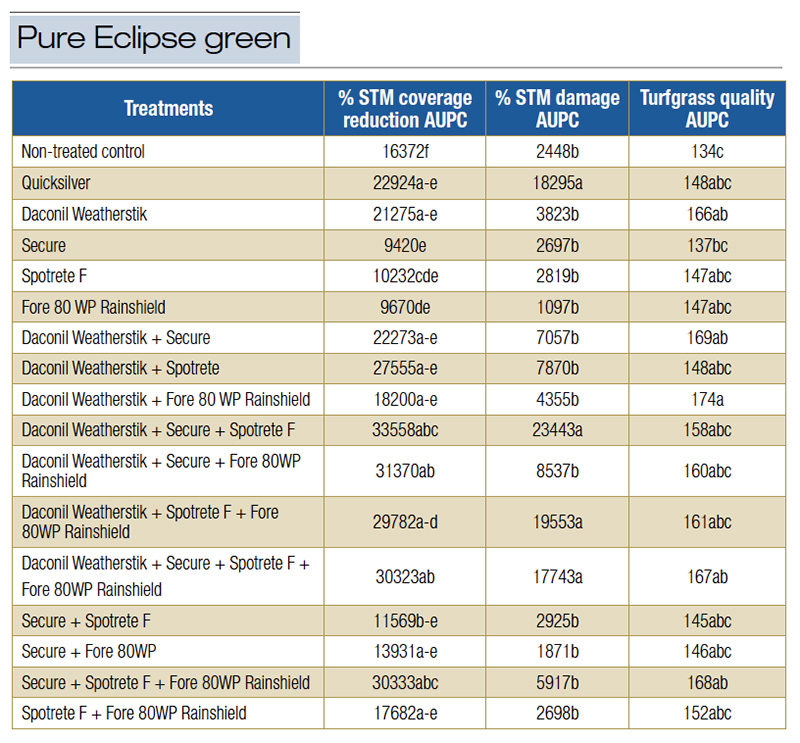
Table 3. Percent silvery thread moss (STM) coverage reduction area under the progress curve (AUPC), percent STM damage AUPC and turfgrass quality AUPC means for each treatment. Study conducted on a Pure Eclipse creeping bentgrass putting green in Fayetteville, Ark., in 2023. Means in the same column followed by a common letter were not significantly different according to Fisher’s LSD (p < 0.05)
Treatments that greatly reduced STM coverage tended to cause the most damage to STM as well. Carfentrazone-ethyl turned STM into a brown/black color, while the fungicide tank-mixes (especially with chlorothalonil) turned the STM into an orange/light brown color. Carfentrazone-ethyl damage was more likely than the fungicide tank-mixes to temporarily decrease turfgrass quality due to the conspicuousness of the damage. While chlorothalonil-alone produced little damage to STM, chlorothalonil tank-mixed with two or three other contact fungicides caused the greatest STM damage. Combinations of the contact fungicides fluazinam, mancozeb and thiram resulted in moderate damage when tank-mixed together.
In addition to carfentrazone-ethyl, contact fungicides can be an effective option for controlling STM. However, multiple applications of these fungicides are needed to eliminate STM completely. Any cultural practice that improves putting green health will give it a competitive advantage over weakened STM post-chemical application. Nitrogen applications, hollow-tine aerification and verticutting are all options to reduce STM coverage (8). Integrated pest management programs that incorporate both cultural and chemical practices will give superintendents the greatest success in managing STM at their facilities.
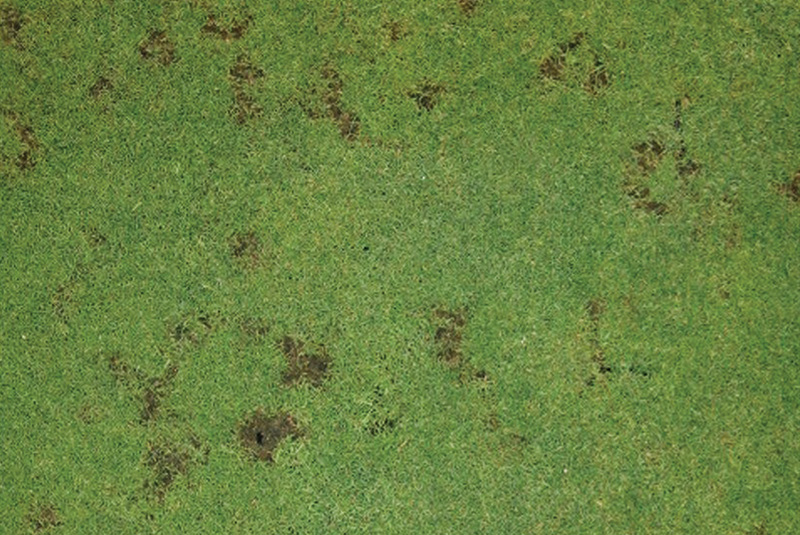
Figure 4. Brown to black discoloration of silvery thread moss on a Pure Eclipse creeping bentgrass putting green in Fayetteville, Ark. Photo taken Oct. 18, 2023, eight days after the third application of carfentrazone-ethyl. Photo by Mike Battaglia
The research says
- Treatments including chlorothalonil were generally the most effective at reducing silvery thread moss (STM) coverage. In addition to chlorothalonil, it is recommended to incorporate carfentrazone-ethyl and other contact fungicides to avoid exceeding label-use rates.
- In our study, the combination of mancozeb + thiram showed little effectiveness; however, the addition of fluazinam to the mix of mancozeb + thiram provided excellent reduction of STM coverage similar to chlorothalonil-containing treatments.
- Any cultural practice that improves putting green health will give it a competitive advantage over weakened STM post-chemical application. Nitrogen applications, hollow-tine aerification and verticutting are all options to reduce STM coverage.
- Integrated pest management programs that incorporate both cultural and chemical practices will give superintendents the greatest success in managing STM at their facilities.
Literature cited
- Boesch, B.P., and N.A. Mitkowski. 2005. Chemical methods of moss control on golf course putting greens. Applied Turfgrass Science 2(1):1-8 (https://doi.org/10.1094/ATS-2005-1006-01-RV).
- Borst, S.M., J.S. McElroy and G.K. Breeden. 2010. Silvery-thread moss control in creeping bentgrass putting greens with mancozeb plus copper hydroxide and carfentrazone applied in conjunction with cultural practices. HortTechnology 20(3):574-578 (https://doi.org/10.21273/HORTTECH.20.3.574).
- Burnell, K.D., F.H. Yelverton, J.C. Neal, T.W. Gannon and J.S. McElroy. 2004. Control of silvery-thread moss (Bryum argenteum Hedw.) in creeping bentgrass (Agrostis palustris Huds.) putting greens. Weed Technology 18(3):560-565 (https://doi.org/10.1614/WT-03-082R1).
- Kennelly, M.M., T.C. Todd, D.M. Settle and J.D. Fry. 2010. Moss control on creeping bentgrass greens with standard and alternative approaches. HortScience 45(4):654-659 (https://doi.org/10.21273/HORTSCI.45.4.654).
- McCalla, J.H. Jr., M.D. Richardson, D.E. Karcher and L.R. Fry. 2002. Moss control in creeping bentgrass putting greens. Hort. Studies, Arkansas Agricultural Experiment Station 20-21.
- Nelson, M. 2007. Of moss and men. USGA Green Section Record 45(4):12-15.
- Raudenbush, Z., S.J. Keeley and L.R. Stark. 2015. A review: Establishment, dispersal, and management of silvery-thread moss (Bryum argenteum Hedw.) in putting greens. Crop, Forage & Turfgrass Management 1(1):1-9 (https://doi.org/10.2134/cftm2014.0094).
- Raudenbush, Z., and S.J. Keeley. 2017. Cultivation reduces infestation of silvery-thread moss in a creeping bentgrass putting green. International Turfgrass Society Research Journal 13(1):686-691 (https://doi.org/10.2134/itsrj2017.02.0092).
- Raudenbush, Z., S.J. Keeley, C. Thompson and M. Jugulam. 2021. Dose responses of silvery-thread moss (Bryum argenteum) to carfentrazone-ethyl. Weed Technology 35(4):611-617 (https://doi.org/10.1017/wet.2021.42).
- Stark, L.R. 2017. Ecology of desiccation tolerance in bryophytes: A conceptual framework and methodology. The Bryologist 120(2):130-165 (https://doi.org/10.1639/0007-2745-120.2.130).
Mike Battaglia (mvb003@uark.edu) is a senior graduate research assistant, Jessy Anders is a program technician, Mike Richardson is a professor of turfgrass science, and Wendell Hutchens is an assistant professor of turfgrass science, all in the Department of Horticulture at the University of Arkansas, Fayetteville. David McCall is an associate professor of turfgrass pathology, and Kevin Hensler is a senior research specialist, both in the School of Plant and Environmental Sciences at Virginia Tech, Blacksburg. Jim Kerns is a professor and Extension specialist in the Department of Entomology and Plant Pathology at North Carolina State University, Raleigh. Hannah Wright-Smith is an assistant professor of weed science at the University of Tennessee, Knoxville.